
Complexity and Organisations: researching practice, the fourth volume in the Complexity and Management new series is published at the end of this month. Produced by the complexity research community at Hertfordshire Business School, the book explores how we can take complexity seriously as we inquire into our working worlds.
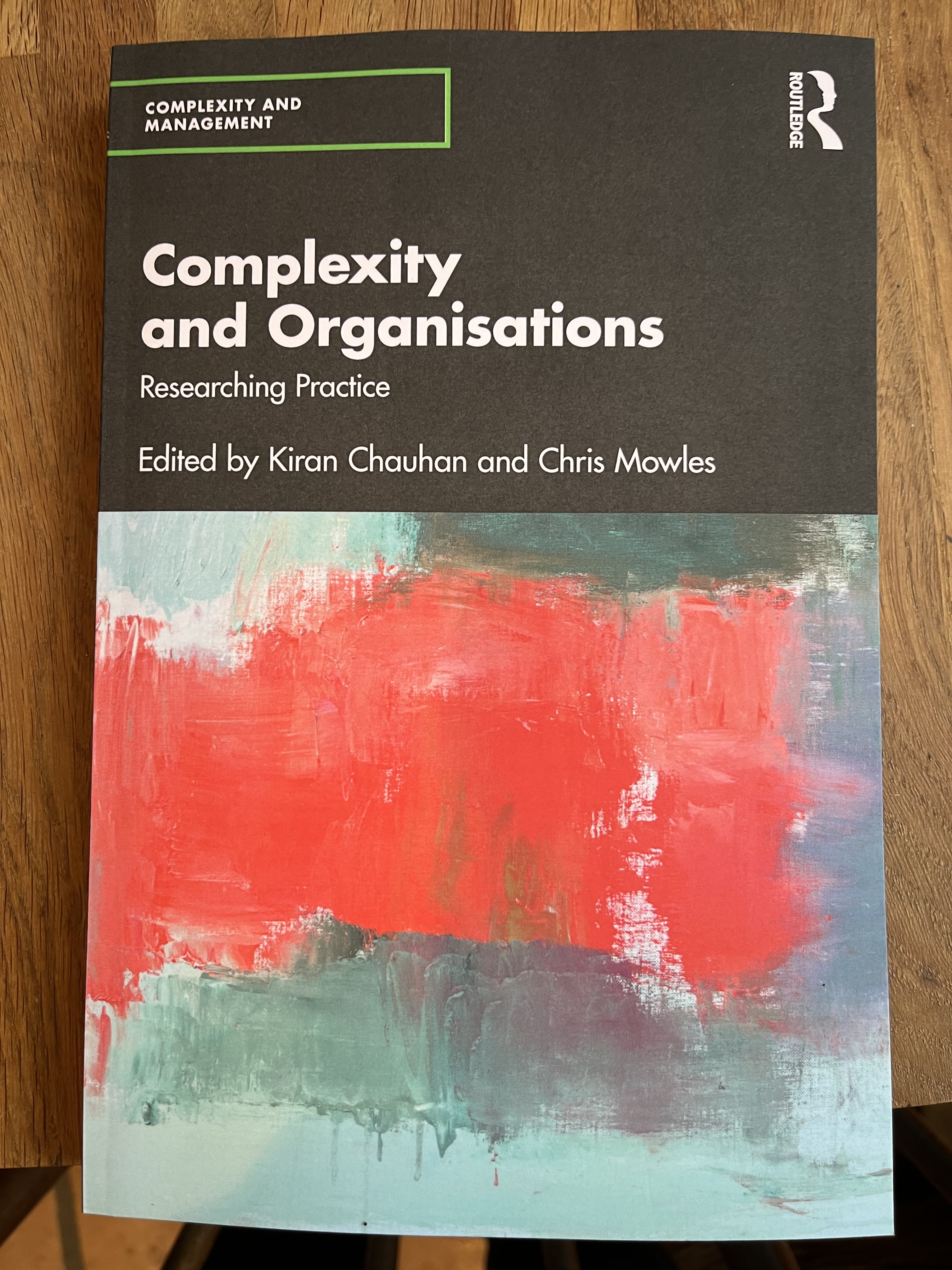
Drawing on their experiences as leaders, managers, researchers and educators, the contributing authors offer insights about exploring social life without trying to reduce or simplify it’s messiness and unpredictability. Addressing themes of history, culture and belonging, compromise, doubt, confidence and its lack, grief and loss, actors and non-human actors, ethics, values and politics, they provide accounts of taking experience seriously, of mobilising our capacity for reflexivity, with all its limitations, in pursuit of understanding more of what it is to be humans amongst humans trying to get stuff done together.
In doing so they make a number of assumptions about organisations and social life more generally.
At the core of organisational life are fluctuating relationships: I am because we are. There are limits to how much we can make the world in our own image, choose, predict and control as if we were autonomous, rational individuals.
We make organisations but organisations make us, a position which deflates the omnipotent assumption that managers and leaders can ‘create cultures’ of their choosing bend the future to their will. We are more influenced than influencing and paying attention to the push-pull of power relationships may give us greater insight into the qualities and limitations of our agency. We are all caught up in the game of organisational life, so how does the game affect us and our sense of belonging and identity; how are we affecting others?
If we are to illuminate how things became the way they are, it matters that we try and understand practical dilemmas in their history and context, and notice specific human bodies acting and speaking in particular ways. We are all shaped by broader social trends which play out differently in different organisations at different times. Management methods taught in business schools may be helpful in general, but we work with known others in the particular here and now. What can we say about the paradox of negotiating with particular others about general dilemmas that help us better understand the tasks we have before us?
Humans are both complex and flawed. Contemporary organisations acknowledge feeling to the extent that it can be harnessed for organisational ends. We are allowed to be passionate, positive and collaborative, but being political, rivalrous and critical are harder to take account of and speak about. Perhaps we can only be wiser about organisations if we can be wiser about ourselves, and our flawed human nature is the crack through which the light gets in. Our anxiety in the face of uncertainty, our need to belong and be recognised our competitive-cooperative impulses, all contribute to the flux and change of organisational life.
Suitable for the curious and the perplexed, whether you are consultants, pracademics, managers or leaders, this volume is a field guide for making better sense of everyday complexity.
Chapters by Drs Kiran Chauhan, Sune Bjørn Larsen, Sophie Wong, Karina Solsø Iversen, Mikkel Brahm, Helle Stoltz, Jannie Rasmussen, Tobit Emmens and Maj Karin Askeland.
 Complexity & Management Centre